

"The Plansee Group ensures a stable and independent supply of tungsten for all customers."
Karlheinz Wex, Chairman of the Executive Board of the Plansee Group.
What makes tungsten so special?
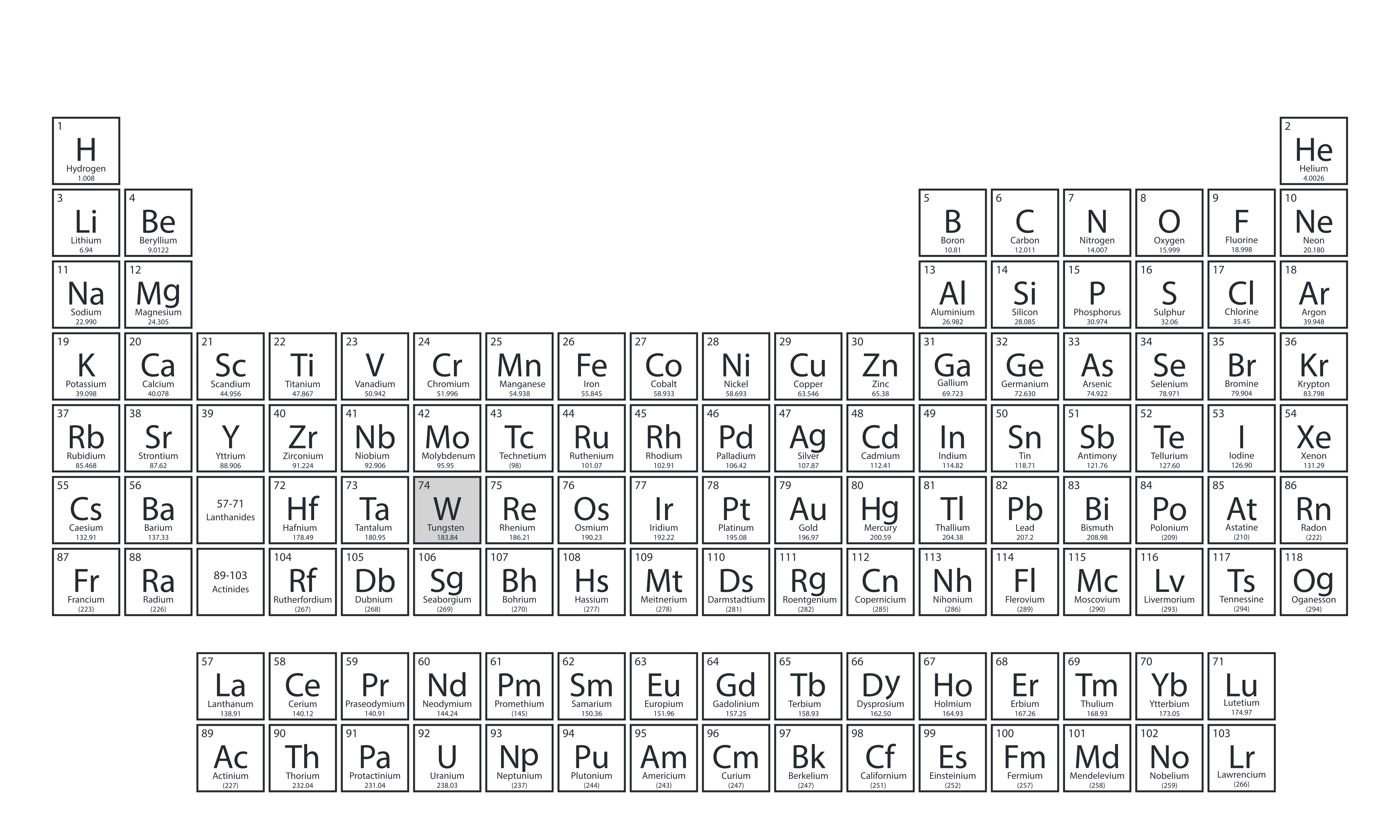
Tungsten is a refractory metal with a high melting point. Derived from the Latin word refractarius (rebellious/stubborn), it lives up to its name: it is a difficult material to work with, which is produced using powder metallurgy processes. With a high density and many other properties, it is indispensable for many applications in the high-tech world.
6192
°F Melting point
Melting point of tungsten
Tungsten is the metal with the highest melting point. By comparison, iron melts at 2827°F and copper at 1949°F.
19,25
Density (grams per cm3)
Density of tungsten
With 19.25 grams per cubic centimeter, tungsten has a density similar to gold. Molybdenum is half as heavy, with 10.22 grams per cubic centimeter.
other properties
- Low thermal expansion coefficient
- Good electrical conductivity
- High heat and creep resistance
- Excellent corrosion resistance
Nice to know
- The physical properties of tungsten change with temperature.
Nachhaltige und zuverlässige Wolframversorgung
Dank Recycling und langfristiger Abnahmevereinbarungen mit Minen sichert die Plansee Group eine zuverlässige, nachhaltige und unabhängige Versorgung mit Wolframprodukten in allen Verarbeitungsstufen – vom Pulver über Halbfabrikate bis hin zu Hartmetallwerkzeugen, Verschleißteilen und Komponenten.
In der Plansee Group ist CERATIZIT auf die Herstellung von Produkten aus Hartmetallen (Wolframkarbid) spezialisiert. Im unten stehenden Link geht es direkt zu den Eigenschaften, Produkten und Anwendungen von Hartmetallen:
Plansee ist auf die Herstellung von Produkten aus Molybdän- und Wolframmetallen spezialisiert. Im unten stehenden Link geht es direkt zu den Eigenschaften, Produkten und Anwendungen von Wolframmetallen: Plansee
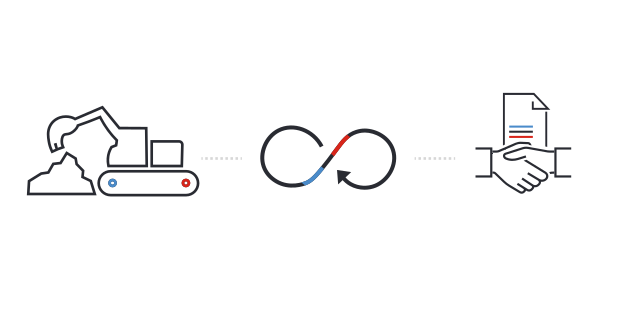
Three pillars for securing tungsten supplies
To ensure security of supply for all customers, the Plansee Group focuses on collecting tungsten scrap, developing and optimizing recycling technologies, and entering into longterm purchase agreements with tungsten mines.
Wie wird Wolfram recycelt?
Wolfram ist unbegrenzt recycelbar und wird in der Plansee Group aus gebrauchten Produkten und Produktionsabfällen zurückgewonnen und wiederverwendet. Dies reduziert die Abhängigkeit von Primärrohstoffen und schont die CO2-Bilanz. Für das systematische Einsammeln der Wolframschrotte setzt die Gruppe auf Rücknahmevereinbarungen mit Kunden sowie flächendeckende Sammel- und Sortiersysteme.
Die Plansee Group entwickelt seit Jahrzehnten Recyclingtechnologien für Wolfram. Dabei stehen zwei Verfahren im Fokus:

Was ist thermisch-mechanisches Recycling?
Beim thermisch-mechanischen Recycling wird aus gut sortiertem Schrott (meistens ausgedientes Hartmetallwerkzeug) in einem mehrstufigen Verfahren pressfertiges Wolframpulver hergestellt.

Was ist chemisches Recycling?
Beim chemischen Recycling werden wolframhaltige Abfälle in Wolframmetall und Wolframkarbid umgewandelt. Chemisch recyceltes Wolfram verfügt über die gleichen Eigenschaften wie aus Minen gewonnenes Wolfram.
Raw material supply via tungsten mines
In addition to tungsten mines in Central America and on the Iberian Peninsula, the Sangdong mine in South Korea will play an important role in the Plansee Group's raw materials strategy. Operated by Almonty Industries, the mine has one of the world's largest tungsten deposits. With a 14 percent stake, the Plansee Group is the largest shareholder in Almonty. Through long-term purchase agreements, the Plansee Group has secured the majority of the production of tungsten ore concentrates from the Sangdong mine.

Frequently asked questions about tungsten
Tungsten is an essential element in many everyday applications.
- In the form of hard metal, a tungsten carbide-cobalt composite material, tungsten is processed into tools that are extremely durable and wear-resistant.
- Tungsten is an important alloying element in the steel industry.
- Tungsten components are found in switch contacts for power transmission, in smartphones, and in medical technology.
Wolfram ist ein vergleichsweise teures Metall. Der Preis für eine metrische Tonne (mtu) Wolfram liegt bei rund 3000 Euro. Der Preis für ein Kilogramm Wolfram liegt aktuell bei rund 300 Euro.
Ja. Tungsten ist die englische Bezeichnung für Wolfram. Beide Begriffe stehen für dasselbe chemische Element mit dem Symbol W und der Ordnungszahl 74. Die Plansee Group verarbeitet es entlang der gesamten Wertschöpfungskette.
Wolfram zählt zu den kritischen Rohstoffen, da es für zahlreiche Schlüsselindustrien unverzichtbar ist und die globale Versorgung stark konzentriert ist. China produziert mehr als 80 % des weltweit geförderten Wolframs und dominiert damit den internationalen Markt.
Der Rohstoff wird vor allem für Wolframcarbid (Hartmetall) benötigt, das aufgrund seiner Härte und Verschleißfestigkeit in der produzierenden Industrie für Werkzeuge und Präzisionsanwendungen eingesetzt wird. Darüber hinaus ist Wolfram ein wichtiger Werkstoff für Luft- und Raumfahrt, Elektronik, Medizintechnik, Fertigungstechnik sowie Sicherheits- und Verteidigungsanwendungen.
Da es für viele dieser Anwendungen keine gleichwertigen Alternativen gibt, ist eine sichere Wolframversorgung von strategischer Bedeutung für die Wettbewerbsfähigkeit, technologische Souveränität und Sicherheit Europas und der USA.
Wolfram ist nicht härter als Diamant. Diamant ist härter als Wolfram und auch noch etwas härter als Wolframcarbid. Mit Schleifwerkzeug aus Diamant lassen sich Wolfram und Wolframcarbid bearbeiten.
Natural tungsten deposits are unevenly distributed worldwide. Around 90 percent of known tungsten deposits are located in China and Russia. Other deposits can be found on the American continent, as well as in South Korea, Australia, and several European countries.
Like many other industrial metals, tungsten can be recycled as often as desired without compromising material quality.
Customers who choose recycled tungsten help to conserve natural resources and benefit from a reduced carbon footprint.
Die Plansee Group deckt folgende Wertschöpfungsstufen in der Wolframfertigung ab:
- Wolframvorprodukte: Ammoniumparawolframat (APT), Wolframoxide, Wolframpulver, Wolframcarbidpulver, pressfertige Pulvermischungen (Home - GTP | Global Tungsten & Powders)
- Wolframendprodukte aus Wolframmetallen, Wolframmetalllegierungen, Schwermetallen und Hartmetallen (Wolframcarbid)