

Tungsten Supply: "Long-Term Thinking Is Essential"
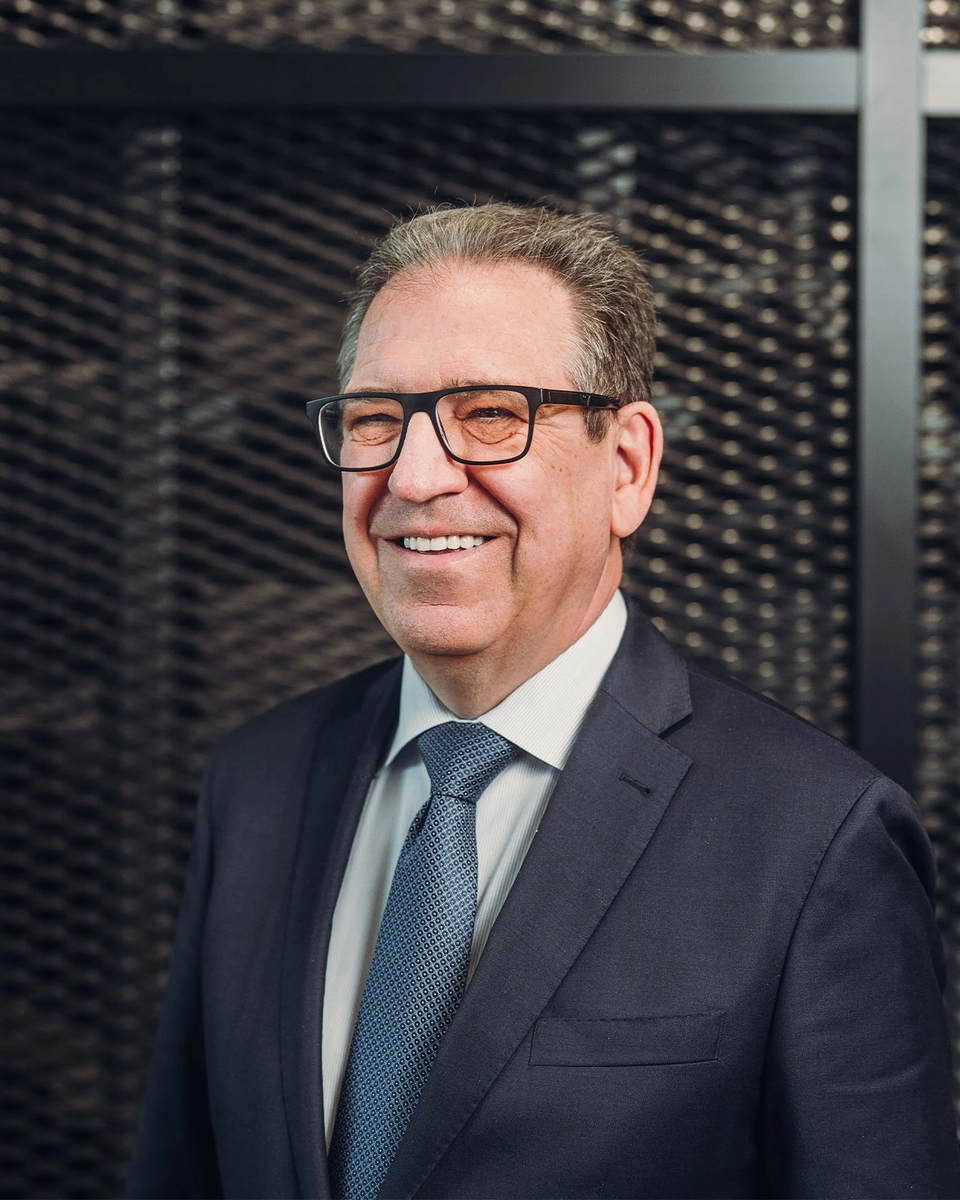
Interview with our Chairman of the Executive Board Karlheinz Wex
In the beginning, there was light.
When humanity began to turn night into day, an unassuming metal soon played the starring role: tungsten. A fine wire, made to glow by electrical current, provided people with reliable, bright, and affordable electric light.
Tungsten's journey into the world's lightbulbs is owed in part to the foresight of the Plansee Group’s founder Paul Schwarzkopf. He recognized the potential of this metal early on and advanced the industrial production of ultra-thin fine wire: the foundation for manufacturing filaments for modern lightbulbs. Thus began a success story that continues to this day.
Other high-tech applications for tungsten would follow the filament bulb: rotating X-ray anodes, carbide tools, and balancing weights – all of which have become an integral part of our modern world. Tungsten is found in products and applications that shape, protect, drive, and make our daily lives more precise.
Reliable tungsten supply is therefore not just important – it is critical for our progress and our future.
Chairman of the Executive Board Mag. Karlheinz Wex takes a look at the Plansee Group's raw material strategy and explains the crucial role of technological developments and long-term partnerships. He also discusses why European politicians should pay closer attention to the topic of tungsten.
Alongside molybdenum, tungsten is the main material used by the Plansee Group, and the company is continually developing new applications jointly with its customers. What makes this metal so special?
Tungsten is a refractory metal, meaning it is particularly "stubborn" to process. Since these metals cannot be processed industrially by metal fusion, they are processed by powder metallurgy: under high pressure and at high temperatures, but still well below the melting point. Their unique properties make them demanding to work with and accordingly expensive.
However, when precise material performance is required, refractory metals like tungsten are indispensable. Its exceptional and diverse properties are why tungsten plays a central role in the aerospace industry, for example. Its shielding capability against X-ray and gamma radiation makes tungsten the material of choice for radiation equipment used in cancer therapy.
So, this metal is used in the manufacture of components for the aerospace industry or serves as radiation shielding. What else is tungsten used for?
Tungsten is primarily used in the tool industry as hard metal, which is tungsten carbide combined with cobalt. Tools made from hard metal can cut a wide variety of materials and are therefore used in manufacturing and all professional wood and stone working applications.
Tungsten is also used in many other areas: as a balancing weight for crankshafts or as fine wire in surgical robots. In many of these applications, there is no suitable substitute for tungsten. Reliable supply is therefore crucial for these industries.
Why is the supply situation in Europe particularly critical?
Tungsten is one of the critical metals. Because of its limited supply, we must use this special metal responsibly. Around 50 percent of known natural tungsten reserves are located in China. The country has systematically developed these reserves and – much like to rare earth elements – dominates the global tungsten market through targeted pricing policy. While other regions have deposits, they are often not utilized because inexpensive tungsten from Asia in many instances makes extraction economically unattractive. Over the past two decades, this has made the Western world highly dependent on China. This became clear when China restricted exports at the beginning of 2025, leading to a sharp increase in tungsten prices. In the second half of 2025, we received numerous inquiries from customers who could no longer fully meet their tungsten material needs.
How does the Plansee Group ensure its tungsten supply security?
More than 20 years ago, we decided to pursue backward integration. This way, we ensure independent tungsten supply for all major regions of the world and a “local for local” production approach wherever possible. This move required strategic foresight, entrepreneurial courage, and the acceptance of high risks.
Our supply is built on three pillars: collecting tungsten scrap, developing and optimizing recycling technologies, and long-term purchase agreements with tungsten mine operators.
Our tungsten products are made from 88% scrap and used products. With our company GTP, we have recycling infrastructure and two different technologies in the USA and Europe, which we continuously enhance. Our subsidiary Stadler handles the logistics as well as the collection and sorting of scrap – a central step in ensuring high-quality raw material. We have integrated these companies into our group over decades. Today, we have a robust foundation in raw material processing, strengthening our supply security.
Products made from recycled tungsten are equal in quality to those made from primary material, at a significantly lower overall CO₂ footprint. Besides supply security, this aspect is becoming increasingly important for our customers.
One of our long-term mining partners is the reactivated Sangdong Mine in South Korea, for example. It’s considered one of the largest tungsten deposits in the world and operated by Almonty Industries. We are the largest shareholder of Almonty and, through a 15-year purchase agreement, have secured all of the company’s production from the Sangdong Mine.
To build such a strategy, it’s important to anticipate as many possible scenarios as early as possible, right?
Long-term thinking is vital for us, almost second nature. A company only survives for over 100 years by truly operating sustainably. Our current approach has grown gradually over many years: from the original emphasis on products, to a stronger customer focus, to developing in-depth application knowledge, and finally securing our raw material base. We have invested heavily in this area over the past decades, facing significant risks. Today, we see that this decision was correct.
Speaking of "Long-term thinking". How do you see the future of the Plansee Group?
We want to expand our capacities to continue to reliably supply Europe and the USA in the future. Today, the Plansee Group is the largest producer of tungsten products outside China and currently meets approximately 12 percent of global tungsten demand. GTP has evolved into one of the most important powder manufacturers and can now fully secure not only our own needs, but also provide raw materials for the market.
We fundamentally aim to be among the top 3 globally in everything we do. We have already achieved this in 80% of our business and consider it in every strategic decision.
Lastly, what does the industry have to do to ensure adequate sufficient tungsten supplies in the future?
We want to be a reliable partner and a stable source for tungsten long-term, both for ourselves and our customers. At the same time, it’s clear: Western supply cannot be secured by one company alone. The entire industry must take responsibility and actively ensure diversified supply chains. Politically, the EU Raw Materials Act is an important first step, providing some regulation for strategic raw materials. What’s missing, however, is a clear, comprehensive strategy that secures long-term tungsten supply and provides the industry with a reliable framework for operation. We have invested in the tungsten mine in South Korea and signed a long-term purchase agreement – a step that is unusual in the private sector. If industry and politics assume joint responsibility here, we can reliably ensure tungsten supply in the future.
Karlheinz Wex has been Chairman of the Executive Board of Plansee Holding AG since 2023 and has been a member of the Plansee Group’s Board for 25 years. After studying business and technical physics, he started his career in the company’s finance department 35 years ago.
About the Plansee Group: Focus on Molybdenum and Tungsten
With its products, the Plansee Group enables applications at the cutting edge of what is technically and physically feasible – in electronics, medical technology, energy supply, mechanical engineering, the construction industry, mobility, and security and defense.
Headquartered in Reutte, Tyrol, the group specializes in the powder metallurgical processing of the high-performance materials molybdenum and tungsten. The value chain extends from the processing of scrap and ore concentrates through the manufacture of intermediate products and blanks to the development and production of customer-specific components and tools.
The Plansee Group, with its parent company Plansee Holding AG, unites two strong business areas:
· Plansee High-Performance Materials, specializing in metallic products made of molybdenum and tungsten.
· Ceratizit, focused on tools made of hard metal (tungsten carbide) for the trades, machining, and industrial manufacturing.
The Plansee Group ensures long-term security of supply for its key materials through recycling and long-term partnerships with mining operators. The Plansee Group holds a 31 percent stake in the Chilean molybdenum processor Molymet and a 10 percent stake in the tungsten mining operator Almonty.
With 11,120 employees at 36 production sites, the Plansee Group generated consolidated revenue of 2.35 billion euros in fiscal year 2025/26. The fiscal year ends on the last day of February.
Media contact
Dénes Széchényi
Head of Group Communications
Nr. +43-5672-600-2243
Mobile +43-664-81 52 598
denes.szechenyi@plansee-group.com


