

National Circular Economy Strategy Must Become a European Raw Materials Roadmap
German Government Sends a Signal
Breitenwang/Reutte, June 12, 2026 – Last week, the German federal government adopted the action plan for the National Circular Economy Strategy. This is a positive sign for the globally active Plansee Group, whose recycling rate for the critical material tungsten is around 90%. Circular economy is more than a contribution to environmental protection and climate goals: it is also a powerful driver of security of supply, competitiveness, and more resilient supply chains.
Tungsten is a prime example of the potential inherent in a consistent circular economy approach. Tungsten is a critical raw material that is indispensable both as hard metal (tungsten carbide) in toolmaking and as tungsten metal in numerous high-tech applications, such as in the medical industry, electronics, or aerospace. The material can be refurbished or recycled on an industrial scale. Tungsten can be recycled almost indefinitely without any loss of quality; unlike with other materials, there is no downcycling. Recycling processes for tungsten have long been established and proven in industrial settings.
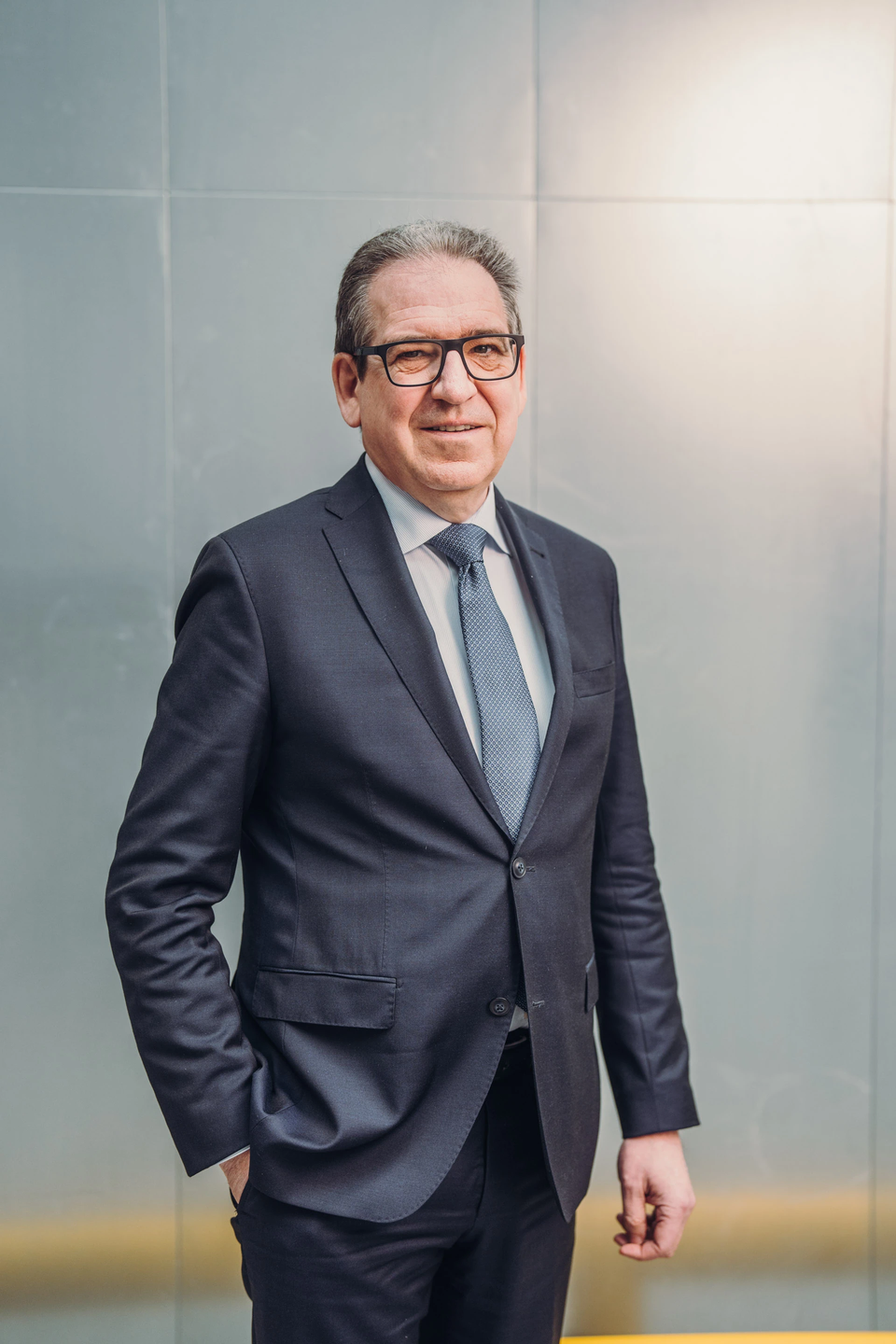
Statements by Karlheinz Wex, Chairman of the Executive Board of the Plansee Group
“With last week’s decision to launch the action plan for the National Circular Economy Strategy, the German federal government is sending an important signal. For us as an international industrial company headquartered in Austria, this step is of immediate importance because Germany is a key industrial hub in Europe and raw material flows, supply chains, and value creation are closely intertwined. If implemented correctly, a comprehensive circular economy not only supports environmental and climate goals but, above all, makes a significant contribution to securing critical raw materials and thus to Europe’s industrial strength.”
“First, we need to expand our understanding of circular economy beyond mere recycling. When it comes to scarce and expensive raw materials like tungsten, the first step is to reduce overall material consumption and extend the lifespan of products by regrinding or refurbishing them to make them usable again.”
“Second, existing secondary raw materials must be consistently retained within regional value chains. This requires clear political framework conditions – such as export restrictions on tungsten scrap, combined with a requirement for recycling and return. This would significantly reduce dependence on primary raw materials and allow existing resources to be used more efficiently.”
“Third, Europe also needs to build up strategic raw material reserves for the future. The U.S. and China are already further ahead in this regard. Building up such reserves must not lead to a further exacerbation of the current shortage. Rather, it is imperative to further increase the recycling rate and to develop and financially secure mining projects in the Western world for the long term.”
“For years, the Plansee Group has demonstrated that a functioning tungsten circular economy is industrially feasible: In fiscal year 2024/25, our tungsten recycling rate was 88 percent. This means that a large portion of our products was manufactured from recycled tungsten.”
About the Plansee Group: Focus on Molybdenum and Tungsten
With its products, the Plansee Group enables applications at the cutting edge of what is technically and physically feasible – in electronics, medical technology, energy supply, mechanical engineering, the construction industry, mobility, and security and defense.
Headquartered in Reutte, Tyrol, the group specializes in the powder metallurgical processing of the high-performance materials molybdenum and tungsten. The value chain extends from the processing of scrap and ore concentrates through the manufacture of intermediate products and blanks to the development and production of customer-specific components and tools.
The Plansee Group, with its parent company Plansee Holding AG, unites two strong business areas:
· Plansee High-Performance Materials, specializing in metallic products made of molybdenum and tungsten.
· Ceratizit, focused on tools made of hard metal (tungsten carbide) for the trades, machining, and industrial manufacturing.
The Plansee Group ensures long-term security of supply for its key materials through recycling and long-term partnerships with mining operators. The Plansee Group holds a 31 percent stake in the Chilean molybdenum processor Molymet and a 10 percent stake in the tungsten mining operator Almonty.
With 11,120 employees at 36 production sites, the Plansee Group generated consolidated revenue of 2.35 billion euros in fiscal year 2025/26. The fiscal year ends on the last day of February.
Media contact
Dénes Széchényi
Head of Group Communications
Nr. +43-5672-600-2243
Mobile +43-664-81 52 598
denes.szechenyi@plansee-group.com


