

When an Industrial Material Becomes Art
New Forms of Expression for Molybdenum
In industry, molybdenum is used to create products for a wide range of high-tech applications: for example, in display coating or as a component in production equipment for the semiconductor industry. Tyrolean artist Stephanie Stern approaches the material from a different perspective in her current exhibition. Her works are on display at Neue Galerie Innsbruck through August 8, 2026.
Materials open up new perspectives – not only in industry, but also in art. In her exhibition Under Pressure. ΔS – Orders of Glass, Stephanie Stern explores precisely this intersection. The focus is on the interplay between people, material, form, and technology. Her work is accompanied by Dutch floral still lifes, which shape the exhibition space together with her own pieces.
Through drawings, photographs, assemblages, and installations, the artist examines how images take form across different media. The result is a multilayered network of connections and new perspectives, shaped by questions of materiality, boundaries, and transformation, as well as the interaction of different systems. Stephanie Stern was recently awarded the State of Tyrol’s Emerging Artist Award (2026) and one of the two advancement awards of the RLB Art Prize (2024).
Technical Order from Matter
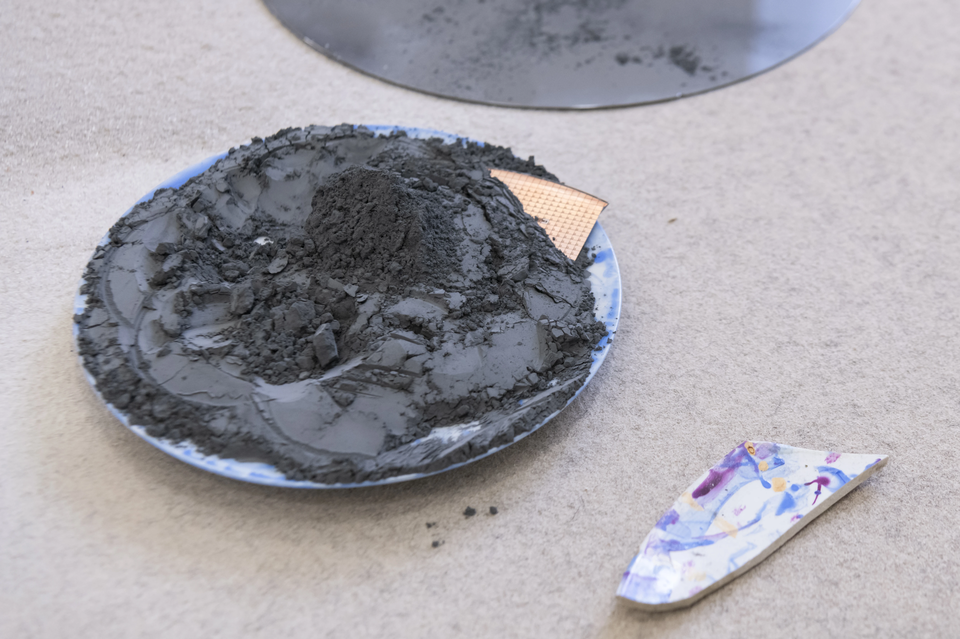
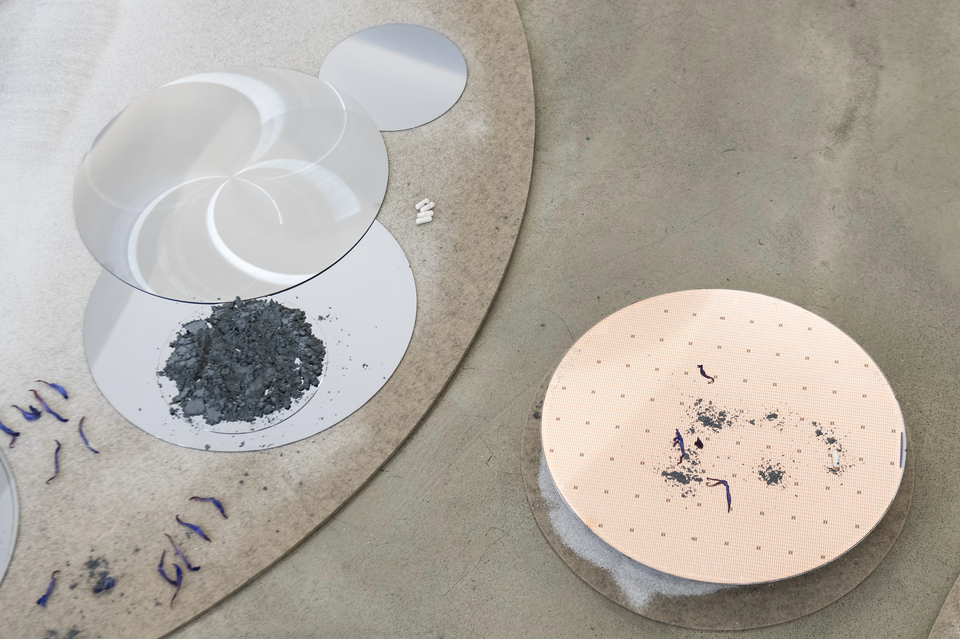
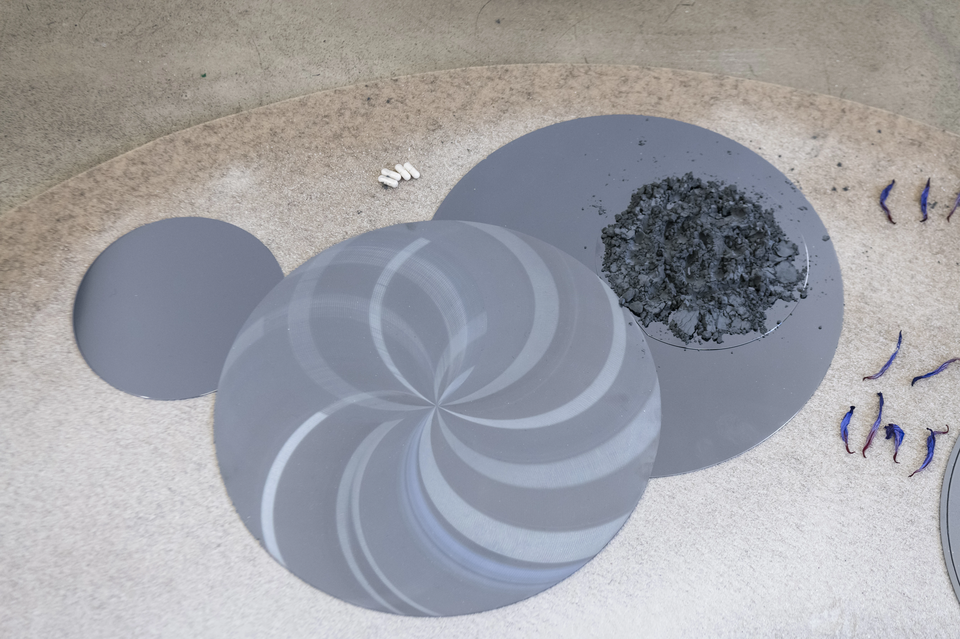
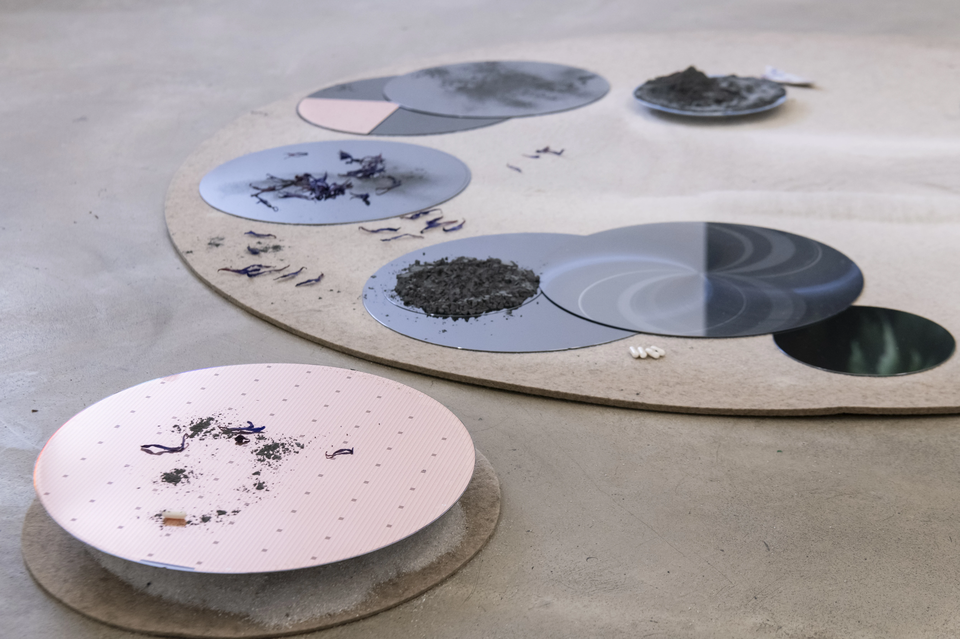
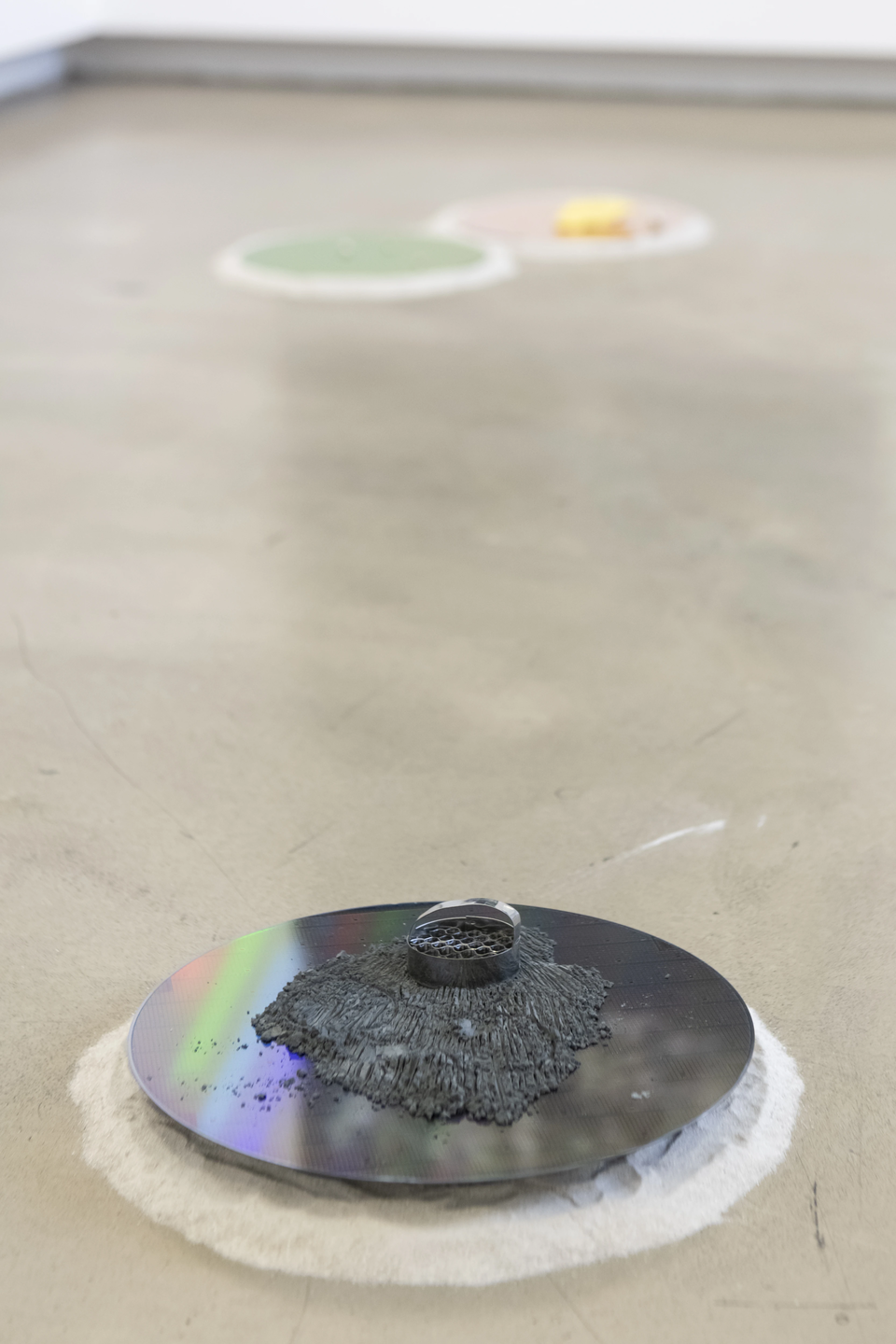
In addition to molybdenum, her latest exhibition also features other industrial materials such as quartz sand and silicon – substances that all play an important role in lithography systems used in the semiconductor industry. High-purity silicon is extracted from quartz sand and then used to produce silicon wafers, an essential component of microchips. Molybdenum, in turn, is an important material in various manufacturing and coating processes in the semiconductor industry.
The transformation of these substances is reflected in the exhibition title: energy-intensive processes turn “less structured raw materials” into “high-precision microsystems” – matter becomes “technical order.” Dietary supplement capsules containing molybdenum also point to the fact that these elements occur not only in industrial processes, but also in nature and in the human body.
Neue Galerie Innsbruck is operated by a nonprofit association, Künstler*innen Vereinigung Tirol, and finances its program largely through public funding and private donations. The Plansee Group supported the exhibition with molybdenum powder from Plansee HPM (a business area) production.
Under Pressure. ΔS — Orders of Glass by Stephanie Stern, curated by Bettina Siegele, on view at Neue Galerie Innsbruck through August 8.
Captions:
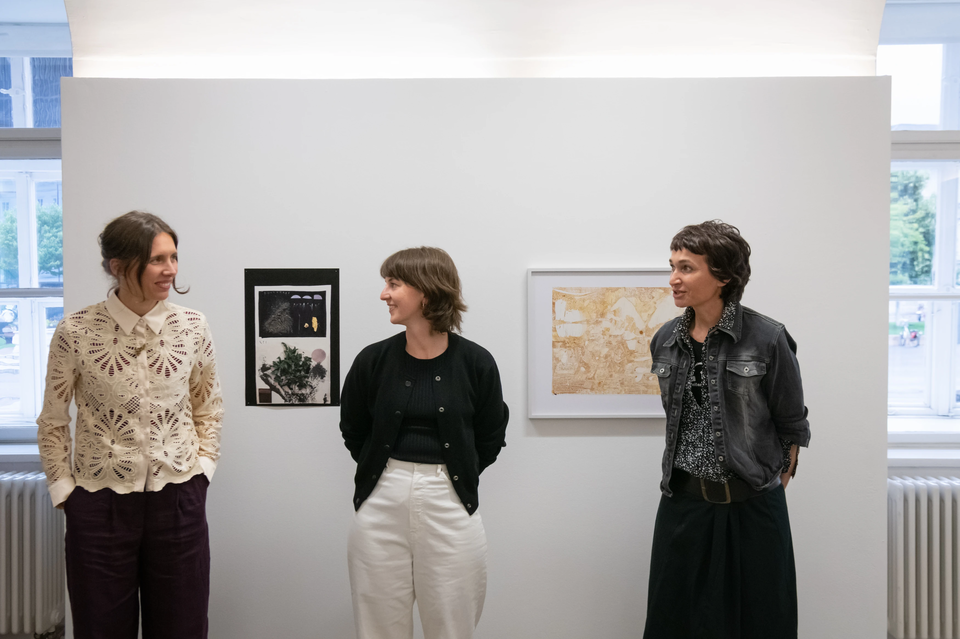
Opening night of the exhibition: from left to right, artist Stephanie Stern, Bettina Siegele (Artistic Director & Managing Director of Künstler*innen Vereinigung Tirol), and Kata Hinterlechner (Board Member of Künstler*innen Vereinigung Tirol).
Exhibition views & floor assemblages, Under Pressure. ΔS — Orders of Glass by Stephanie Stern
Photos: Daniel Jarosch, 2026
About the Plansee Group: Focus on Molybdenum and Tungsten
With its products, the Plansee Group enables applications at the cutting edge of what is technically and physically feasible – in electronics, medical technology, energy supply, mechanical engineering, the construction industry, mobility, and security and defense.
Headquartered in Reutte, Tyrol, the group specializes in the powder metallurgical processing of the high-performance materials molybdenum and tungsten. The value chain extends from the processing of scrap and ore concentrates through the manufacture of intermediate products and blanks to the development and production of customer-specific components and tools.
The Plansee Group, with its parent company Plansee Holding AG, unites two strong business areas:
· Plansee High-Performance Materials, specializing in metallic products made of molybdenum and tungsten.
· Ceratizit, focused on tools made of hard metal (tungsten carbide) for the trades, machining, and industrial manufacturing.
The Plansee Group ensures long-term security of supply for its key materials through recycling and long-term partnerships with mining operators. The Plansee Group holds a 31 percent stake in the Chilean molybdenum processor Molymet and a 10 percent stake in the tungsten mining operator Almonty.
With 11,120 employees at 36 production sites, the Plansee Group generated consolidated revenue of 2.35 billion euros in fiscal year 2025/26. The fiscal year ends on the last day of February.
Media contact
Dénes Széchényi
Head of Group Communications
Nr. +43-5672-600-2243
Mobile +43-664-81 52 598
denes.szechenyi@plansee-group.com


